

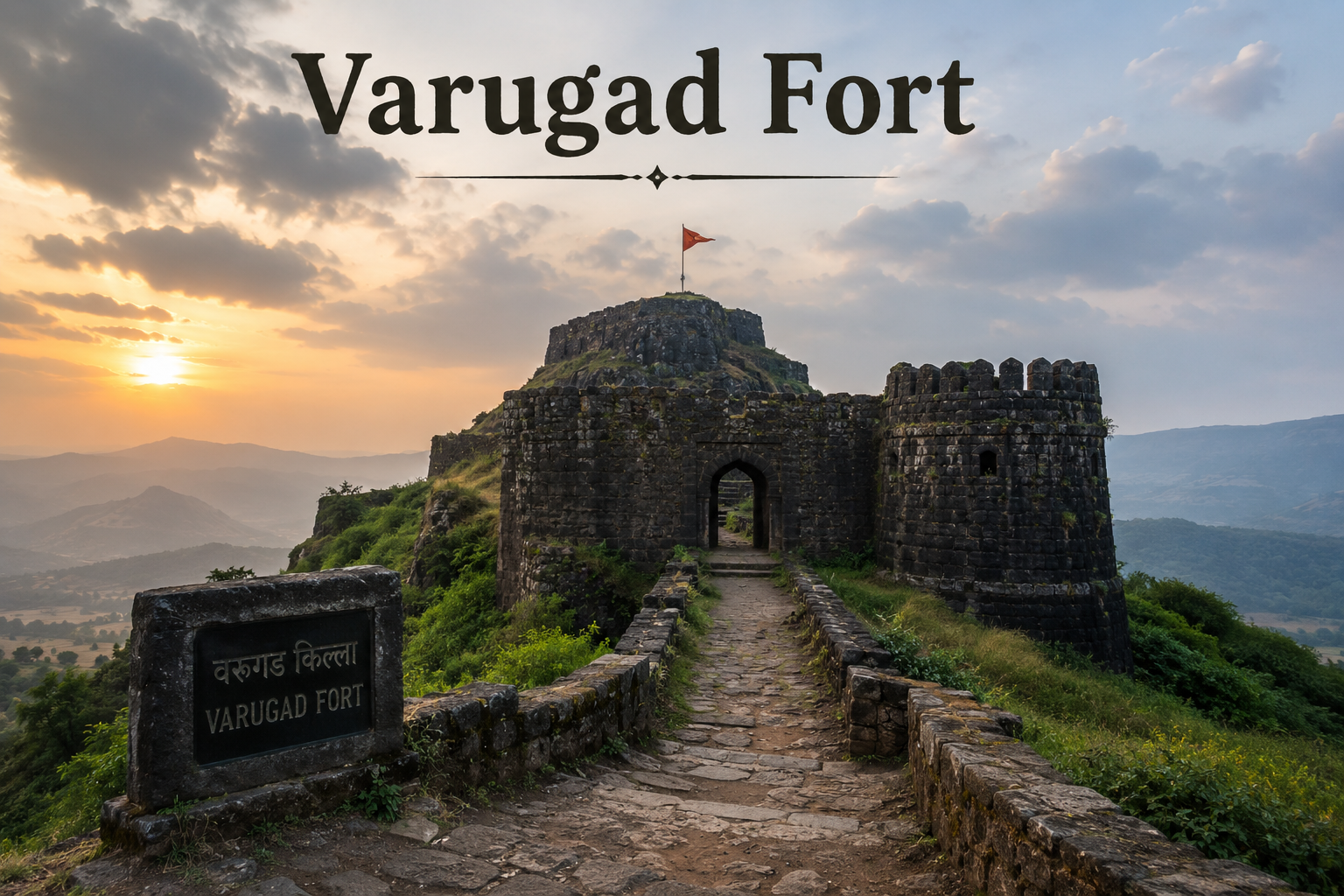
Varugad Fort: History, Location and Travel Guide
Varugad Fort is an ancient hill fort that is located within the Maan Taluka of the Satara district of Maharashtra. The fort is situated between 3,160 and 3,000 feet is located within the Mahadev range which was served as a barrier between the two regions that comprised Phaltan as well as Maan in the past.
Geographic Setting
The fort is situated at the middle of the dry flats, rolling hills with panoramas are of Phaltan plains are stunning. The fort’s hilly topography was a its natural defense advantages. In monsoon, the area surrounding Varugad Fort is lush, which makes it a beautiful spot for people who hike and those who love history.
Early Origins
There are a number of water cisterns dating back to the ancient times which indicate that the fort wasn’t constructed by Maratha. But, as was evident from the past, it was extensively renovated and fortified during the 17th century to increase its defenses against the growing Mughal forces that occupied the surrounding Plains as well as trade routes.
Maratha Era Importance
It is believed it was Chhatrapati Maharaj who rehabilitated the fort during the year 1674. Varugad Fort was strategically located, and it was the center of movements in the region. The fort and its adjacent villages were guarded by an ongoing force of around 200 Gadkaris as well as sepoys.
British Period Events
In 1818, as there was a Third Anglo-Maratha War was going on The fort was transferred in 1818 to Vitthal Pant Phadnis on behalf of the Raja of Satara. When compared with other forts, it wasn’t lost in a large way in the sense that a variety of its structural elements remained in the present day.
Architectural Highlights
The fort is unique in its entrance that is Gomukhi in the natural world with enormous bastions of stone and robust walls fortifying it. There are a variety of water tanks and ponds made from the surface of the rock, and an enormous square pit, commonly known as an dungeon shows practical military plans and water management skills.
Religious Sites and Religion
It is believed that the Bhairavnath Temple serves as a spot that is a place of worship for locals and is situated in the middle of the machi. In the time of festivals, pilgrims usually arrive. It is believed that the Varugad Fort can be used for an integrated excursion to the cultural and trekking experience as groups are able to stay near the temple.
Trekking and Access
The trek is easy to moderate, and appropriate for those who are just beginning. The final uphill is just a 10 or twenty minutes of climbing beginning in Ghodewadi village. The vehicles have accessibility to the highway in close proximity to the summit, specifically via the Phaltan-Dahiwadi highway during dry season.
FAQs
Q. Can Varugad Fort be appropriate as an introduction to the game?
A. The trek isn’t long and not too difficult that it’s a good option for those who are new to trekking and families.
Q. What is the best moment to go?
A. Monsoons are more lush and the weather is generally better than in winter the views and pathways are more clear.
Q. Are there facilities at the fort?
A. There is basic accommodation as well as water, and food items will be transported by those who visit Bhairavnath Temple. Bhairavnath Temple.